Pix - Internet Banking
Product Optimization & Cross-Platform Adoption

Overview
Pix was originally designed as a mobile banking application. As adoption increased, a new opportunity emerged: enable access through web browsers without forcing users to learn an entirely different experience.
The challenge was not simply creating a responsive website.
The challenge was reducing the learning curve while maintaining consistency across platforms and preserving user confidence in critical financial operations.
Business Context
The product already had a validated mobile experience.
However, expanding to the web introduced several risks:
-
Increased user friction due to different interaction patterns
-
Higher onboarding costs for existing customers migrating between devices
-
Potential decrease in task completion rates
-
Increased support demand caused by inconsistent experiences
The objective was to create a web experience that felt immediately familiar to existing users while remaining accessible to new users.
Product Goal
The primary objective was:
- Enable users to transition from mobile to web with minimal cognitive effort.
Success would be defined by:
-
Reduced learning curve
-
Faster task completion
-
Consistent user journeys across devices
-
Higher adoption of the web platform
-
Reduced friction in banking operations
Product Challenge
How might we expand a validated mobile banking experience to the web while preserving user familiarity and reducing behavioral friction?
This required balancing:
-
consistency vs platform-specific optimization
-
speed of adoption vs redesign opportunities
-
user expectations vs technical limitations
Discovery & Analysis
Existing Product Evaluation
The first step was understanding which parts of the mobile experience generated value and should remain unchanged.
Rather than redesigning everything for desktop conventions, the team analyzed:
-
navigation patterns
-
task frequency
-
critical financial journeys
-
existing user behaviors
Key Insight
Users had already learned how to perform core banking actions.
The problem was not functionality.
The problem was transferring that knowledge to another platform.
Product Decisions
Decision 1 — Preserve Familiar Mental Models
Problem
Traditional desktop banking interfaces often introduce different navigation structures, increasing cognitive load for existing users.
Decision
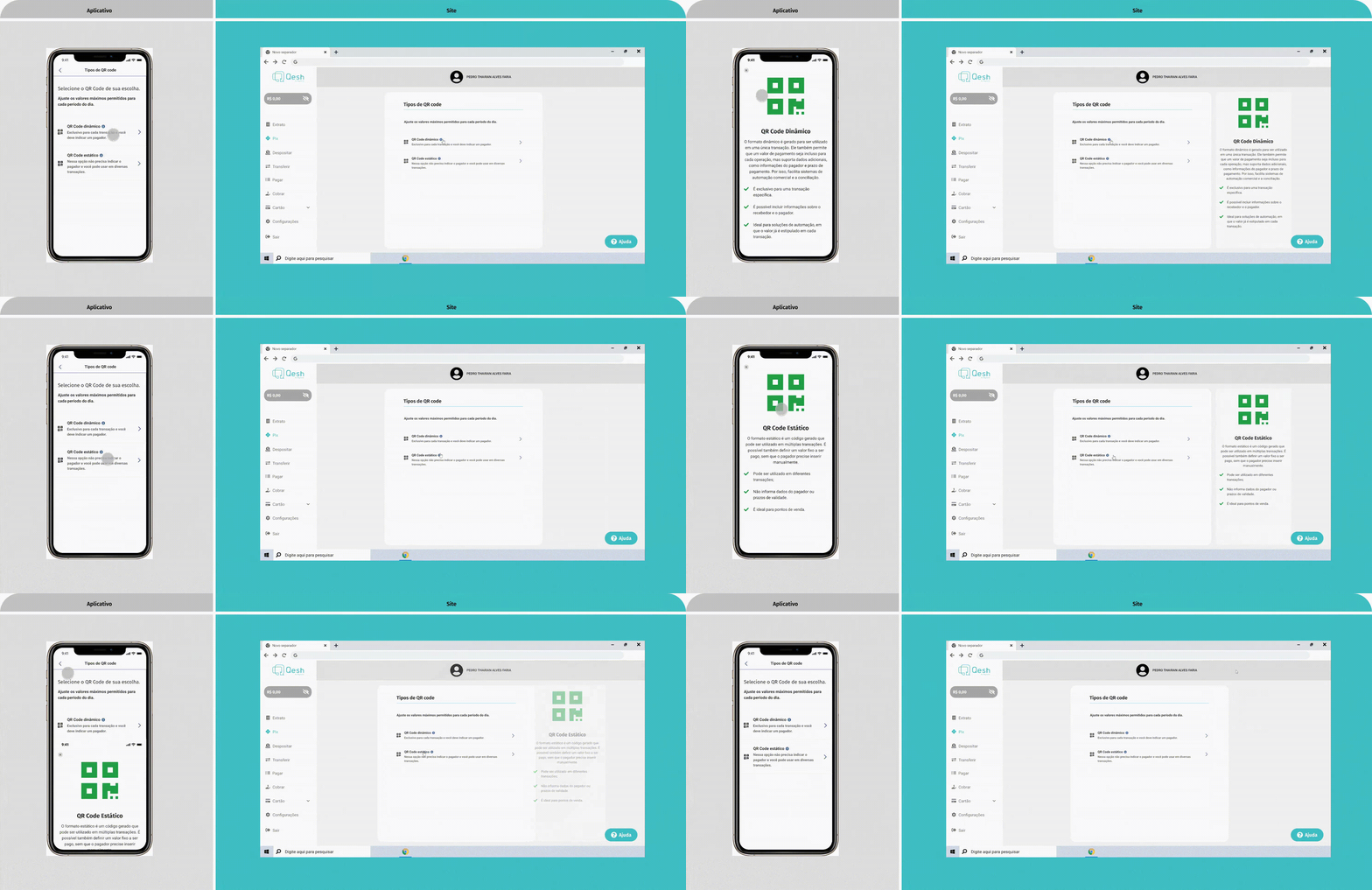
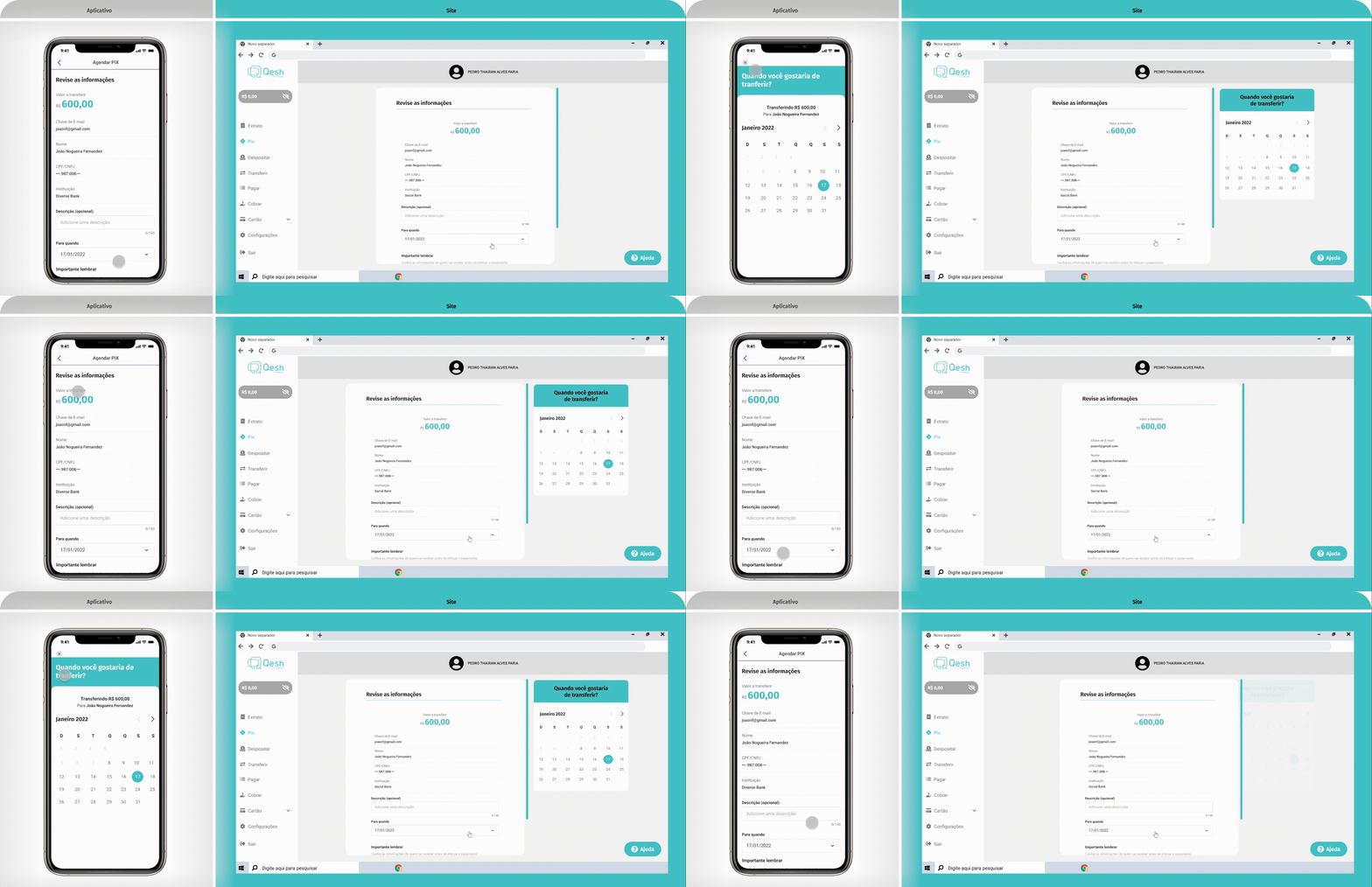
Retain the same core information architecture and navigation logic used in the mobile application.
Trade-off
❌ Full redesign optimized exclusively for desktop
✅ Familiar experience across platforms
Product Rationale
Reducing relearning was more valuable than maximizing desktop-specific patterns.
Expected Outcome
-
Faster adoption
-
Reduced user confusion
-
Improved task completion
Decision 2 — Responsive Rather Than Separate Experiences
Problem
Building completely independent experiences would increase maintenance costs and create inconsistencies.
Decision
Adopt a responsive product strategy that preserved functional consistency across devices.
Trade-off
❌ Device-specific experiences with divergent flows
✅ Unified product experience
Product Rationale
Consistency reduces friction and creates predictable user behavior.
Expected Outcome
-
Lower operational complexity
-
Greater product consistency
-
Easier long-term scalability
Decision 3 — Prioritize Core Banking Tasks
Problem
Users primarily accessed the platform for a small set of high-frequency activities.
Decision
Prioritize visibility and accessibility of critical actions such as account management, payments, and Pix transactions.
Trade-off
❌ Equal emphasis on every feature
✅ Focus on highest-value user actions
Product Rationale
Product success depends on optimizing the most frequent behaviors rather than every possible interaction.
Product Outcomes
The project focused on improving:
-
Cross-platform adoption
-
User confidence
-
Navigation efficiency
-
Task completion
-
Consistency between mobile and web experiences
Most importantly, it transformed a mobile-first product into a multi-platform experience without forcing users to relearn core workflows.
Key Product Learnings
Familiarity is often more valuable than novelty.
Cross-platform expansion is fundamentally a product challenge, not just a design challenge.
Consistency can accelerate adoption and reduce support costs.
Users should transfer knowledge between platforms, not start over.